


Synthetic BioSystems (SyBioS)
Philippe Nghe, Professor, team leader
Thomas Gaillard, Associate Professor
David Mignon, Research engineer
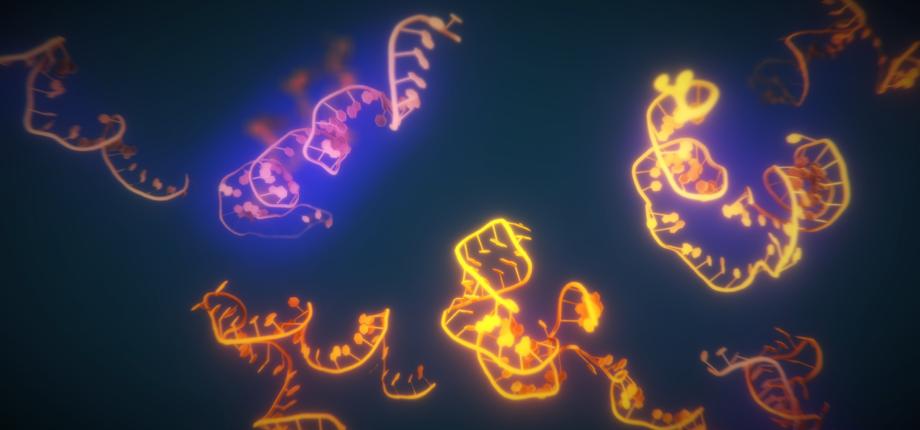
RNA
What is the common thread between innovative therapies and the origin of life? RNA!
RNA lies at the heart of living systems because it controls gene expression and translation. Programmable by its sequence, it is a powerful tool to interfere with gene expression. Multiple therapeutic modalities are currently under development: RNA interference, small molecules targeting RNA, messenger RNA, and gene editing via CRISPR.
Moreover, a major hypothesis for the origin of life is the “RNA world.” Since RNA can both store information like DNA and catalyze reactions like proteins, it is conceivable that early cells relied primarily on RNA for their functions.
In the lab, we combine machine learning and high-throughput experimental screening to generate functional RNAs. Experimental methods based on sequencing allow us to build our own databases, which we use to train AI models.
Proteins
(coordinator Thomas Gaillard)
As their name suggests, proteins play a key role in the functioning of living organisms. Among other things, they are involved in cell structure, transport, signaling, regulation, and defense. Enzymes are proteins that catalyze biochemical reactions.
Protein design aims to create new proteins or modify existing ones to achieve a specific function. Deep learning-based computational protein design (CPD) approaches have shown spectacular advances. Physics-based methods retain certain advantages, such as explanatory power and independence from a dataset. The laboratory has expertise in computational protein design, both from a methodological and application perspective. We develop a CPD software called Proteus (https://proteus.polytechnique.fr).
We are also interested in designing ligands that can interact with proteins to modulate their function. These ligands can be small molecules, peptides, or proteins.
Integrative Synthetic Biology
Biomolecules operate within a broader biological context, interacting with other molecules in an organized manner in space and time. By combining AI-driven design with physics, we aim to predict how RNAs and proteins assemble, enabling compartmentalization and regulation of biochemical reactions. We are also interested in optimizing biological networks, whether genetic or metabolic.
Selected publications
Lambert, C. N., Opuu, V., Calvanese, F., Pavlinova, P., Zamponi, F., Hayden, E. J., Weigt, M., Smerlak M. & Nghe, P. (2025). Exploring the space of self-reproducing ribozymes using generative models. Nature Communications, 16(1), 7836.
- Wang, S., Allauzen, A., Nghe, P., & Opuu, V. (2025). A guide for active learning in synergistic drug discovery. Scientific Reports, 15(1), 3484.
- Nghe, P. (2025). A stepwise emergence of evolution in the RNA world. FEBS letters, 599(19), 2706-2717.
- Blokhuis, A., Lacoste, D., & Nghe, P. (2020). Universal motifs and the diversity of autocatalytic systems. Proceedings of the National Academy of Sciences, 117(41), 25230-25236.
- Opuu, V., Nigro, G., Gaillard, T., Schmitt, E., Mechulam, Y., & Simonson, T. (2020). Adaptive landscape flattening allows the design of both enzyme: substrate binding and catalytic power. PLOS Computational Biology, 16(1), e1007600.